


Roof Rats & Mice
Do you hear Roof Rats scratching in your attic ? Roof Rats are incredibly common and can cause a significant amount of damage including chewing on electrical wiring, destroying important heirlooms, stored belongings, and destruction of insulation. Rats are colony species, meaning if you’ve seen one there are many more just around the corner.
Roof Rats will typically enter your home at night or early evenings. In addition to the physical destruction of property, they leave fecal and urine deposits (droppings) in your attic and walls. This matter can spread up to 35 different diseases and act as a scent trail to additional colonies. Most people identify the presence of a roof rat colony by seeing droppings, hearing scratching noises, or locating outdoor entry points, During your Free Inspection and Estimate your technician will further identify these and create a custom plan to remedy the issue.
We have a unique system developed to kill rats quickly outside of the residence. Our process can guarantee prompt results without causing disturbing dead rat smells. Roof Rats are a survivor species with incredible environment adaptability. Through the years they have learned to thrive in urbanization and figure out the most common threats, for example - snap traps. If the colony has encountered these before, they will avoid them entirely. If not, the rats will figure out the threat within 3 days. For this reason it is of your best interest to contact an experienced technician with proven results. See FAQ’s below for more information on the species!
Our technicians are equipped to begin service at time of Inspection to Guarantee prompt Rodent Removal.

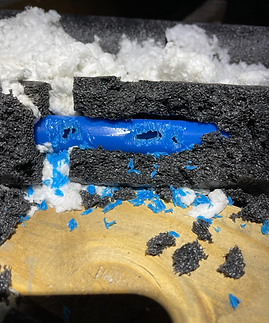
Roof Rat Damage
Roof Rats are colony species, meaning they den and travel in packs of 15-50. They find each other by identifying scent trails left behind by other members. Each time a roof rat takes a step they drop a small amount of urine creating these maps, so to speak, for other rats to follow. Even Though they tend to stay close to their colonies, they are not always traveling together. When a few of the roof rats discover the sanctuary of your attic they will burrow around and leave their scent. Eventually the rest of the colony will follow suit at various times. This can explain why you hear intense noises at some points and none at others. They do not actually live full time in your attic space, they just seek refuge from predators throughout the night. For this reason you will hear noises very early in the morning and after dusk.

Breeding
An ongoing joke we have around Guaranteed Rodent Removal Services is that roof rats make bunnies look like nuns. They reproduce at incredibly rapid speeds and come to maturity quickly. Each birth can produce 7-15 live births. The most common rate of reproduction is 7-10 times annually. This means each female is responsible for over 100 new rats a year! Five to six weeks after birth a female roof rat is ready to conceive babies and will only be pregnant for 21-23 days. These animals are incredibly rapid breeders to say the very least. When using at home treatments it is highly unlikely you will be able to outrun the breeding pattern of the colony in your attic. If you do by some small chance rid the colony, you will still have a tremendous amount of scent trails left in your attic that will surely attract a new colony and the process will only continue. For this reason a professional company that uses powerful products wisley is an absolute necessity. Not only do you need to completely eradicate the colony, but your home needs to be sealed of all exterior holes, and your attic fogged with a powerful disinfectant/deodorizer. These products are not available to the public and require a valid Texas Department of Agriculture license for purchase. This is just one more reason to check the credentials of your rodent control provider.

How to know you have Rats
The best way to know for sure is to get an inspection by a licensed professional. During this inspection they will identify droppings left behind. Each rat can produce up to 50 droppings per day, now multiply that by the size of the colony. Your technician will see these in places such as your attic, garage, home exterior, ect. Once droppings are identified he will continue to look for gnawing marks on entry holes or hard surfaces in your attic, this is just further confirmation they are present. Additional signs you could have a rat infestation include, but are not limited to, grease tracks or rub marks, scratching or gnawing sounds throughout the night/ early mornings, or of course an actual rodent sighting. If you suspect a colony, it is best to promptly call a professional rodent removal company to diagnose and create an individual plan for your home.

What do rats eat?
Unfortunately for homeowners, roof rats are not picky eaters. Similar to Squirrels they are omnivores, meaning they eat meats, fruits, and vegetables. They will eat just about anything hey have access to including but not limited to, Tree bark Dog and cat food Nuts & seeds Insects Lizards Papers Candle wax Vegetables/ Fruits Livestock feed As you can see they are quite exceptional and follow their extremely strong sense of smell. You will not eliminate a colony just by putting food away. They can smell a single piece of dog food from a football field away. In order to eradicate the colony, professional intervention is necessary. In addition to the obvious health concerns of living with rats, they also pose a danger to household appliances. If the rat smells food or senses a water source they will use their incredibly sharp teeth to gain access to the source. A great example of this would include electrical wiring and water pipes . Within the exterior coating of most wires there are traces of soybean product. A roof rat will pick this up and chew on the wire coating, sometimes damaging the actual wire beneath. The same temptation goes for water flowing in pipes throughout the home. While roof rats are far more scared of you than you are of them, they can still pose quite a threat to your home if left untreated.